
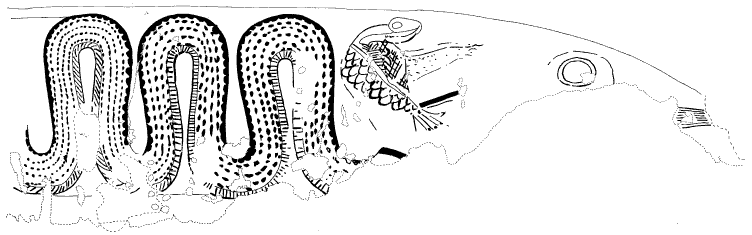
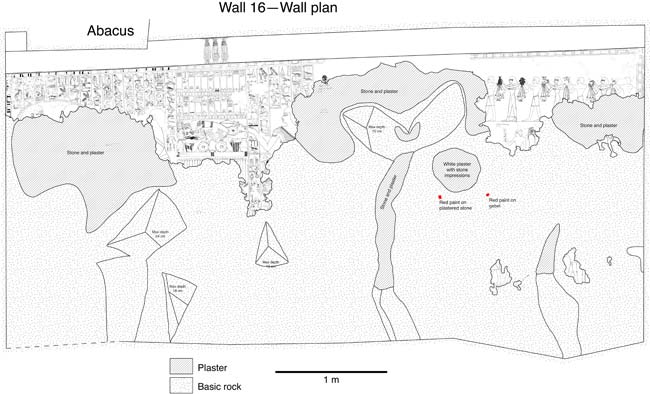
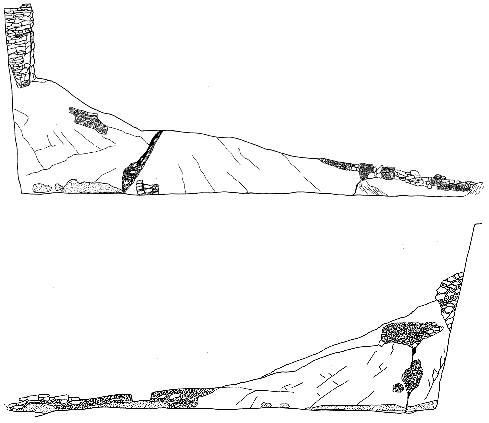
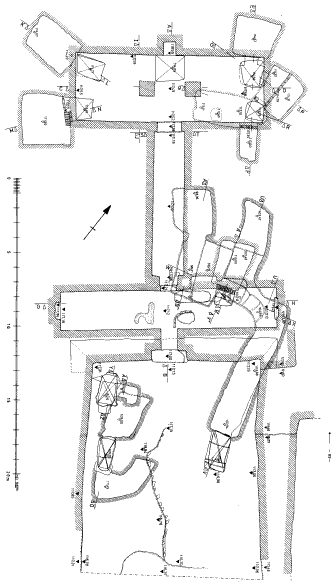
Introduction and thanksThe Permanent Committee of the Supreme Council for Antiquities granted permission in August 2000 for the University of Cambridge Theban Mission to continue work in Theban Private Tomb 99 of Senneferi. I should like to thank Prof. Gaballa Aly Gaballa, Principal Secretary of the SCA and all members of the Committee for agreeing to the request for permission to work in Thebes. In particular I am grateful to all the staff in Abbassiya for enabling this permission to be carried out. In Luxor, I am indebted to Mr Sabri Abdel Aziz, General Director of Upper Egypt and Luxor and Mr Mohamed el-Bialey, General Director of the West Bank, for their assistance. The inspector attached to the Mission during the season was Mr Abdulrahman Ahmed Hassan, without whom the season would not have been so successful, and we are very grateful to him for all his help and advice.1 Financial backing was generously provided by a variety of sources: the Society of Antiquaries of London, Townley Group of the British Museum Friends, Dr J. Klemek and Mr and Mrs A.W. Ladd. The support and good wishes of many others are acknowledged. We are very grateful to the Egypt Exploration Society for the use of the facilities of their Cairo office, and to their representative, Miss Rawya Ismail, for her help and support. The Mission worked in Luxor from 23 September to 22 October 2000. Members of the mission were: Dr Nigel Strudwick (Field Director), Mrs Helen Strudwick (Assistant Director), Miss Julie Dawson (Conservator), Miss Bridget Leach (Conservator), Dr John Taylor (Coffins specialist), Dr Pamela Rose (Ceramics specialist), Dr Gillian Pyke (Ceramics specialist), Miss Amanda Dunsmore (Ceramics specialist) and Mr Anthony Middleton (Photographer). The purpose of this season was to continue and complete systematic study of the finds and to complete the conservation of some of them. A number of other tombs were visited for comparative purposes. Epigraphy and architectural documentationThe large-scale copying of the paintings of the tomb had been completed in previous seasons. However, a number of small details, in particular a selection of khekher friezes and abacus decoration was copied to complete these drawings. The walls were also completely photographed in large format transparencies. A number of queries about the scenes have also been resolved. Over the past three seasons plans of the walls have been prepared. Because the walls are rather damaged, the idea of these diagrams is to present the surviving evidence of how the rock was prepared and plastered, as well as illustrating the extent of damage; in addition, these diagrams also enable the location of the surviving paintings to be specified with accuracy. A sample wall plan is reproduced here. Elevations of the facade and side walls of the courtyard were also completed to complement the plans and sections of the tomb made in earlier seasons by Günter Heindl. This work was undertaken by Nigel and Helen Strudwick. 1. A more popular `Dig Diary' will be found at http://www.fitzmuseum.cam.ac.uk/tt99/diary00/index.html. |
© Nigel Strudwick 1997-2018