Post New Kingdom coffins (John H. Taylor)
Between 1 and 12 December a preliminary study was made of the approximately 17,000 fragments of wooden coffins and cartonnage mummy-cases dating to the Third Intermediate Period and later. All of these had been smashed to pieces, and the fragments dispersed throughout different parts of the tomb. The pieces range in size from substantial sections more than 1 m long to minute scraps less than 1 cm square.
A substantial part of the work involved distinguishing diagnostic from non-diagnostic wood and cartonnage fragments, and assigning the former to chronological phases. This was done principally on the basis of their stylistic features, supported by technological aspects and visual assessment of wood-types. Further sorting made possible the identification and partial reconstruction of individual coffins. In most cases, the surviving fragments of decoration represent less than 50% of the original surface area of the coffins, in other cases considerably less than this. The majority of the fragments are very small, and frequently consist only of the surface of painted gesso adhering to a linen or ceramic backing, the wood having disappeared. This suggests that the coffins may have been brought out of the shafts and broken up for use as firewood, leaving behind those portions which were not usable as fuel.
On the basis of this material, it has been possible to identify four main phases of post-New Kingdom activity in the tomb:
Late 21st dynasty
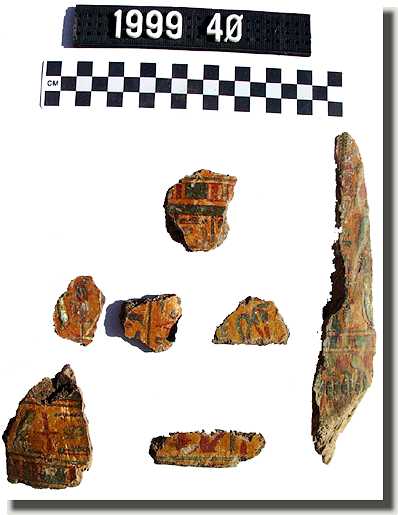
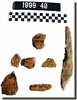 This period is represented by very small fragments of anthropoid coffins with the characteristic polychrome decoration and deep orange-yellow varnish. Variations in the decoration of the surviving pieces suggest that from two to four burials had been placed in the tomb in this period. This total included at least one man and one woman, as the iconography and figured decoration of the coffins indicates, but no names or titles are preserved. Internal details of the floral collars and the use of a repeating uraeus motif to decorate the lip of the coffin cases are characteristic features of the latter years of the 21st dynasty or the beginning of the 22nd dynasty.
22nd dynasty
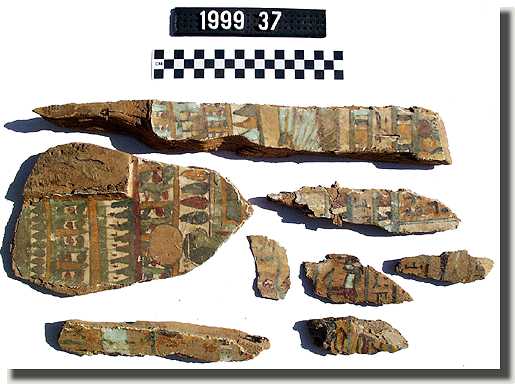
Fragmentary cartonnage mummy-cases represent perhaps six to eight burials of this period. Limitations of time did not allow this material to be studied in depth but preliminary observations were made in the course of a rapid survey of the fragments. The cartonnages are decorated in the two most common styles of the 22nd dynasty-one with figured scenes arranged in horizontal registers and compartments, the other with falcons and winged goddesses enfolding the body in a protective embrace. Among the names preserved are those of a woman named Tayuheret and a man Djedhoriuefankh. Stylistic variations in the paintings suggest that the burials in this period took place over two or more generations since iconographic features characteristic of both the earlier and later 22nd dynasty are present. Many fragments of black-painted wooden coffins without decoration may represent the remains of the outer cases in which the painted cartonnages were placed.
25th dynasty
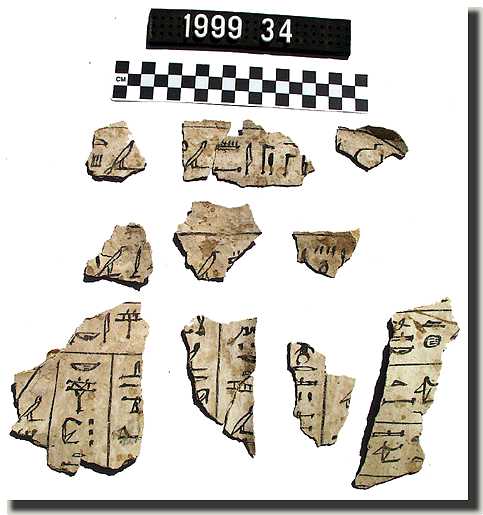
This period witnessed the reoccupation of the tomb for the burial of the Fourth Prophet of Amun and Great Controller of the City Wedjahor, dated by inscribed mummy-linen to the reign of Shabaka. As befitted an official of high rank, Wedjahor was provided with a set of coffins; fragments of the anthropoid intermediary (1 below) and inner (2 below) coffins from this ensemble survive. Closely contemporary on stylistic grounds is an openwork cartonnage case of unusual design, which was made for a woman named Nini, possibly the wife of Wedjahor. A fragmentary intermediary coffin with polychrome decoration also dates to this period, as do fragments of rectangular outer coffins of the qrsw-type.
|
|
|
1 |
2 |
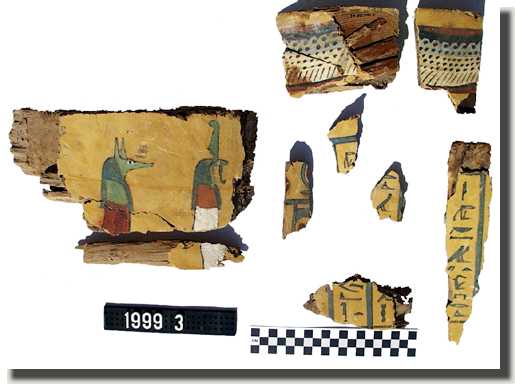
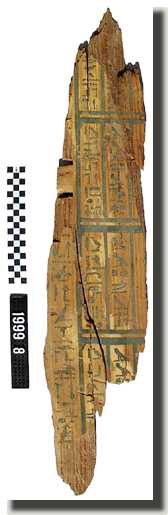
3 Fragments of an intermediary anthropoid coffin of an unidentified owner, with figures of deities and texts including extracts from chapter 125 of the Book of the Dead. 25th dynasty |
|
|
|
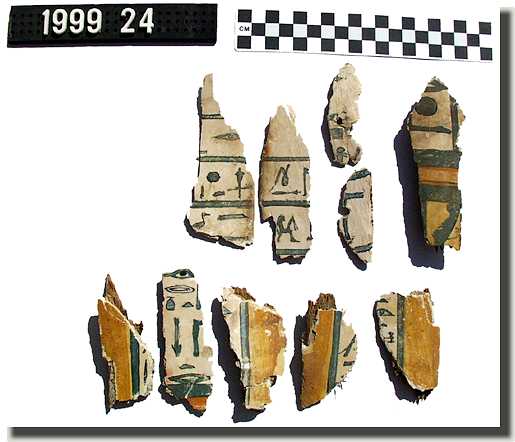
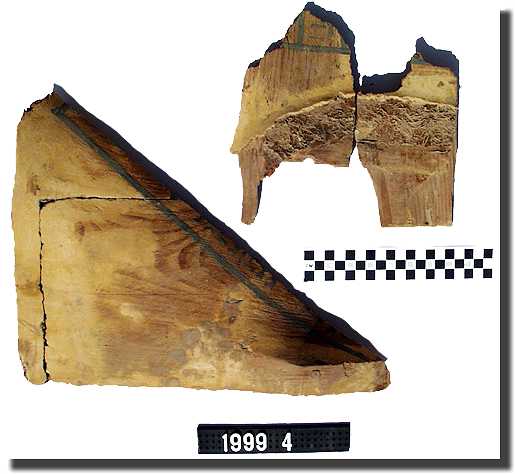
4 Fragments of the foot from the lid of an intermediary anthropoid coffin. 25th dynasty |
5 |
6 |
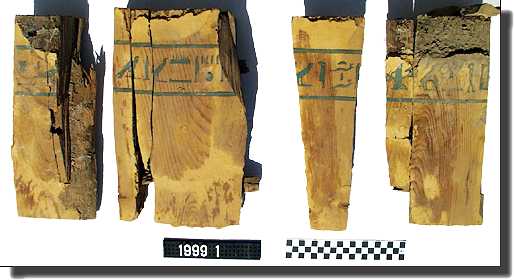
Fragments of a full set of coffins for Horempe, the son of Wedjahor have also been identified. The outer coffin was of the rectangular qrsw type, with inscriptions in white on a red-brown background. This contained one or possibly two intermediary anthropoid coffins. A substantial portion of the lid of one of these survives, decorated with blue-painted inscriptions associating parts of the deceased's body with those of various deities, whose figures are also included. This text is attested on several other coffins of the 25th dynasty. Horempe's inner coffin was of the type with a dorsal pillar and a pedestal beneath the feet, and was decorated with polychrome paintings on the exterior and black ink texts on a white-painted interior. Fragments of additional coffins dating to the same period may possibly have belonged to other relatives of Wedjahor. These include a priest named Padiamun (who possessed a rectangular qrsw coffin), a singer (Hs) of Amun Diesehebsed, and a woman with the unusual name Tasedjem-tamaheret (var. Tasedjemheret).
26th dynasty
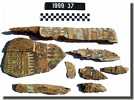 The latest phase of burial attested in TT99 is the middle to late 26th dynasty. Coffin fragments survive from the burials of at least four individuals in this period, in outer and inner anthropoid coffins with polychrome decoration. The inferior quality of the painting of these specimens, and the absence of qrsw outer coffins suggests that these later occupants were of lower status than the family of Wedjahor, and may have been unrelated to them. One of these coffins was inscribed for a priest (possibly a Doorkeeper) of Amun whose mother was named Amenirdis. Other coffins bear the names of a `lady of the house' Sekhmet-neferet and a woman named Neskhons[-pakhered ?].
|
|