Ceramics (Gillian Pyke and Pamela Rose)
This season saw preliminary study of the pottery from the three chambers at the bottom of Shaft I, located in the courtyard of the tomb; these chambers were cut for the burial of Senneferi. Over 500 kg of pottery had been found, which was tentatively identified as part of the burial of Senneferi when it was excavated during the 1998 season. This work was undertaken by Gillian Pyke from 1 December to 19 December. Due to other commitments, Pamela Rose was able to spend only two days on site. This time was spent in identifying the types of silt vessels present and determining an estimated number of vessels found in this deposit.
The pottery was separated into groups based on technology and fabric, and the sherds belonging to each were weighed as a means of characterising the deposit. The groupings consisted of marl amphorae, canopic jars, other marl vessels, imported vessels, large silt storage jars and smaller open and closed silt forms. All the vessels are consistent with the date of the burial of Senneferi, late in the reign of Thutmose III. Later contamination of the material was observed only in the corridor. This became significant only in the levels closest to the entrance to the shaft. The later material was comparable with that found in the shaft, including Late Roman and later sherds of types observed in the courtyard in the 1998 season. This material had clearly spilled into the corridor when the shaft was refilled, perhaps after the investigations of Mond.
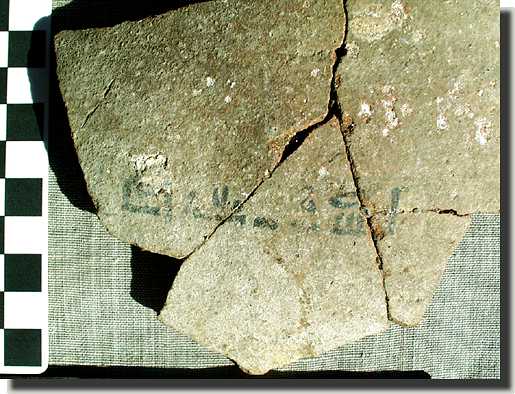
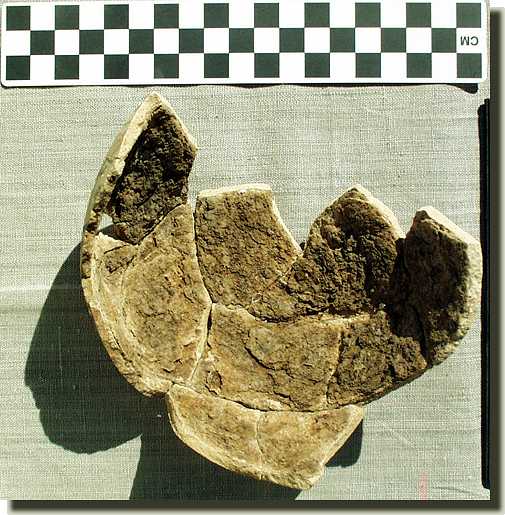
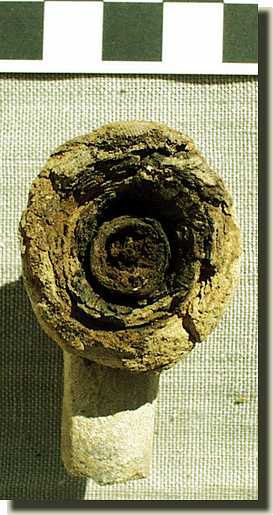
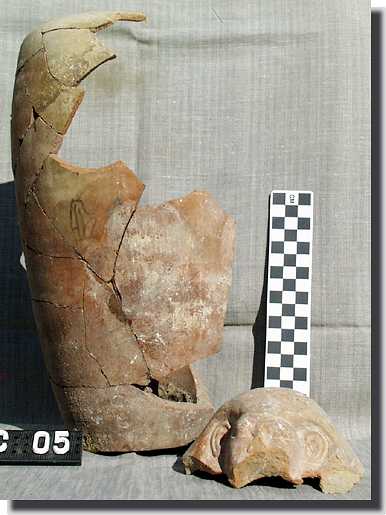
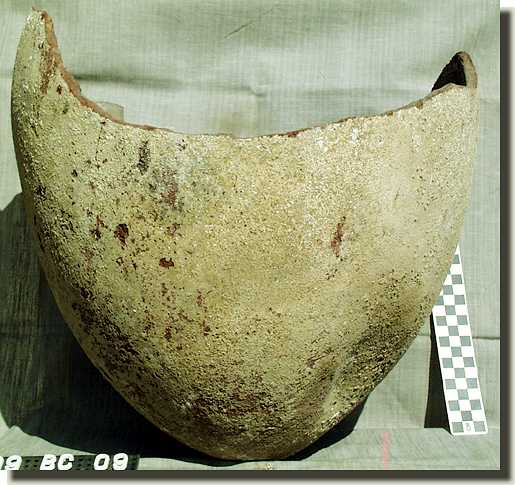
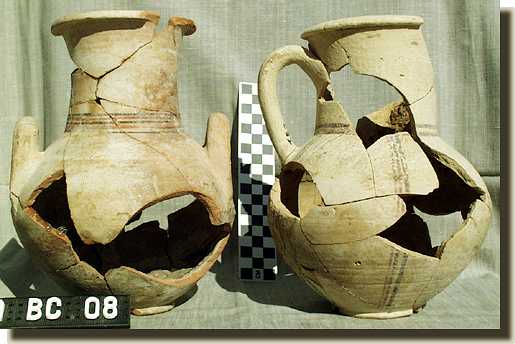
Several vessels, including most of the amphorae, and some bottles, pilgrim flasks and single-handled jars were inscribed with hieratic labels. A preliminary examination of some of these labels indicate that several vessels contained wine (1 above). A number of vessels, including pilgrim flasks and single- and loop-handled jars were found to have deposits inside them, which might be the remains of their contentse (2 above). Several also had remains of the plugs and bindings which were used to seal theme (3 above). Some vessels, particularly large silt jars and flange-rimmed bowls, were coated with a white material, perhaps gypsum. This coating was found to cover breaks on some vessels, while on others it did not. One of the amphorae also had a white coating. It is possible that these vessels were coated as part of the burial ritual.
 Joins were made between sherds in each level and between levels, showing that fragments of many of the broken pots were scattered throughout these rooms. The fact that most of the fragments of the fine marl vessels and the imports were found within the burial chamber suggests that this was where they were originally located. The majority of canopic jar fragments were also from the burial chamber, but were also found throughout the burial complex. All four vessels were joined from rim to base, and each was found to be inscribed with the name of one of the sons of Horus. Two of the human-headed lids were found in the 1998 season, and several joins were also made to these.
 A more detailed examination of the material was carried out to determine the number of vessels present. There were an estimated 120 vessels in total, including around 20 large silt storage jars, 8 amphorae, 19 fineware marl vessels, and 5 imported vessels.
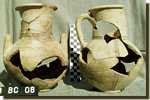 The latter included a pedestalled jar, a mould-made pilgrim flask and a tall-necked single-handled bottle in a distinctive reddish-orange fabric. Two thin walled vessels, one similar to the reddish-orange single-handled bottle, were of a chocolate brown fabric, with a resinous deposit inside. The place of origin of these vessels has yet to be identified.
Examples of each type of vessel were drawn and, where possible, photographed. Photographs were also taken of some of the deposits, sealings and bindings, and inscriptions. This provides a basic record of this important group of pottery.
This assemblage of early New Kingdom funerary ceramics appears to be one of the most extensive yet discovered. Despite its broken nature, it offers enormous potential for further study.
.