
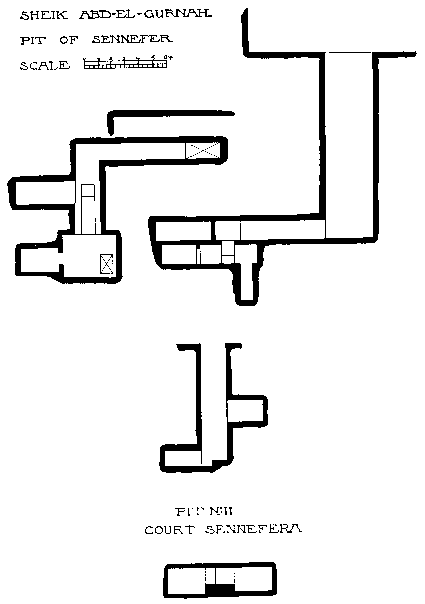
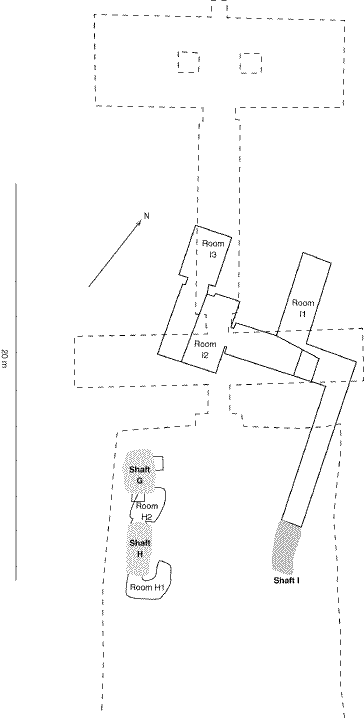
Archaeological workArchaeological work was concentrated on the three shafts in the courtyard. At the end of the 1997 season we had partially excavated the large shaft I; there were two further shafts (G & H) to be excavated. The following are the preliminary accounts of the excavation, since there was no time in this season to study the finds from the work in any detail. A table summarising the quantities of finds made will be found below. * For comparison, the first 11 m of the shaft excavated in 1997 produced 1553 finds, and 404 kg of pottery.
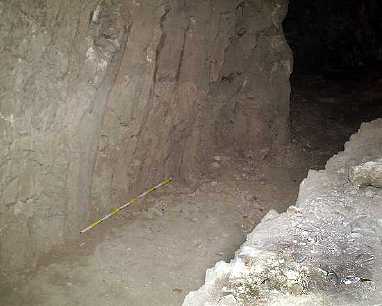
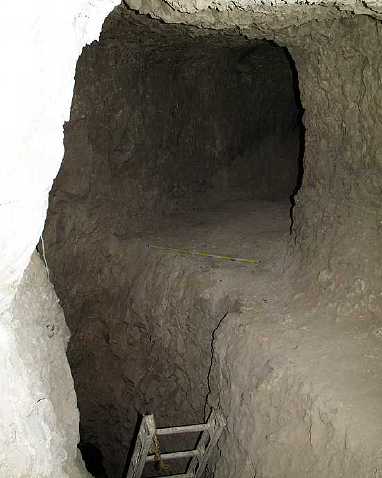
Shaft G:This shaft was excavated in two days, and appears to be an abandoned attempt at a burial place. It is 2.5 metres deep, and there are two small excavations at the East and North sides, but neither of these proceeded very far, and thus we conclude that the shaft was never seriously used for burials. That on the north side may simply be the result of enlargement of a fissure in the bedrock which passes through the shaft at this point. The shaft was filled with material of a very similar nature to that found in shaft I. Finds: Recordable finds from this shaft were relatively few in number and of a very restricted range of object types, but showed a broadly similar mixture of material to that found in the other shafts. The ceramics, however, have yet to be examined. Presumably the shaft contents excavated in 1998 resulted from refilling subsequent to a modern illicit or recorded clearance. As there were no chambers associated with this shaft, it was agreed with the SCA that it could be refilled once it had been planned. The refilling was carried out using debris from the burial chamber of shaft I of this tomb. Shaft H:
Finds: Both rooms produced relatively meagre numbers of finds; the majority of noteworthy material from this context came from the shaft. Excavation of the shaft was completed after our ceramics team had departed, but it is clear that the pottery is a mixture of all periods from the New Kingdom until relatively modern. The fact that there seems to be a considerable amount of New Kingdom pottery might make it possible that this is a shaft of that date. Other contents consisted of a range of object types, including funerary cones, a few shabtis, coffin fragments, and modern items. As with the other shafts, cursory examination indicates that it was refilled after earlier investigation with the general fill available in the courtyard. At the end of the season, the shaft was used for the storage of the pottery discarded after the study of the ceramics carried out (see below). A cover was installed on the shaft. Shaft I:
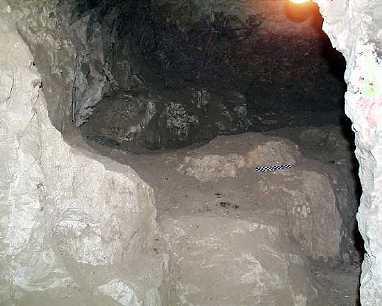
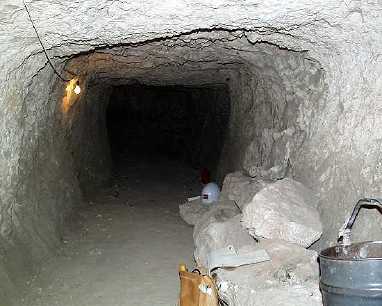
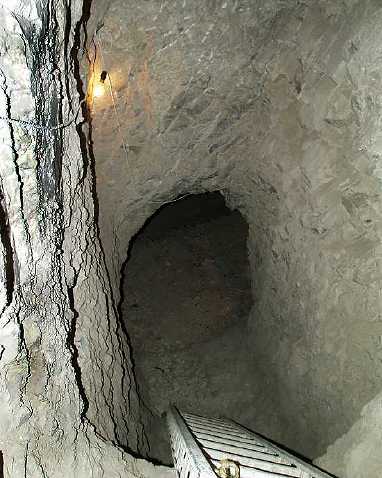
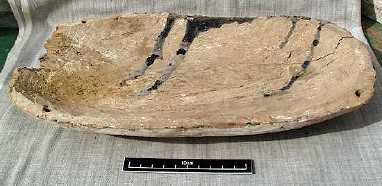
Finds: The contents of the remainder of the shaft and the contents of the chambers were very different in nature, and thus must be treated separately, as the shaft material belongs to the refilling with debris similar to that in the courtyard, while the chambers contain largely material related to the original burial. Shaft : The fill material from the shaft continued the same broad pattern as that noted from the 1997-8 season. The lower layers of the shaft produced disproportionately more recordable finds than those above, although the very bottom metre consisted almost exclusively of fine dust. There was likewise almost no pottery found at that level. This is probably as a result of complete clearance being stopped once entrance could be gained to the subterranean rooms. Underground apartments: The material found underground was rather different. A considerable number of wooden fragments, mainly of coffins, were found almost from the start of work, and most of these appeared to be of black coffins with yellow decoration, a type very characteristic of the Thutmoside period and later. The absence of the type of material found in the fill of this shaft and in the courtyard was very noticeable, in particular the lack of granite fragments and parts of shabtis and funerary cones. As noted above, there is no evidence for any systematic investigation in recent times of these chambers. However, the smashed nature of the burials and the manner in which this material was mixed with debris is clear evidence for systematic disturbance. The discovery of fragments of matchboxes in the lower levels of the burial chamber (room 3) leaves little doubt that one great upheaval has occurred in the past 125 years, and was almost certainly not that conducted by Mond.
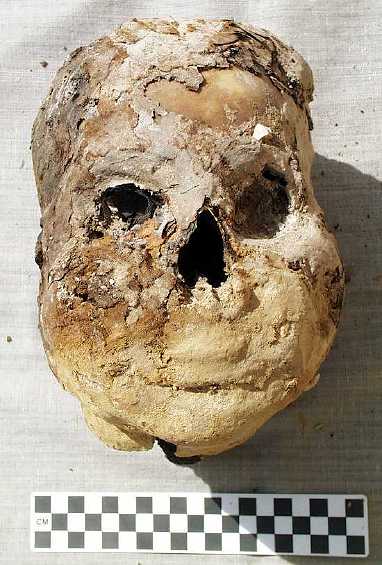
A wide range of material was found, including (as noted) many pieces of the black coffins, some with traces of gold leaf overlay, typical of the period in which Senneferi lived. Some of the decoration on these coffins was carved in raised relief, as well as decoration being painted. It seems likely that there are remains of more than one coffin. Hands, ears and beards (see picture 1 below) of coffins were also located.
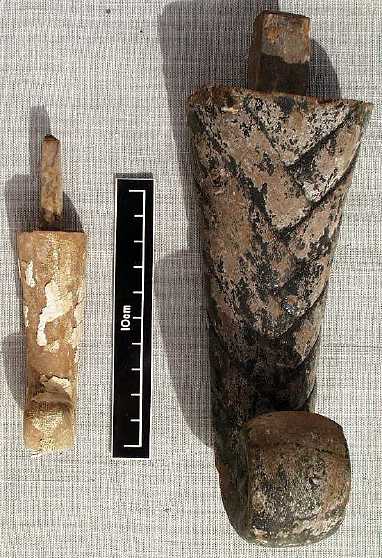
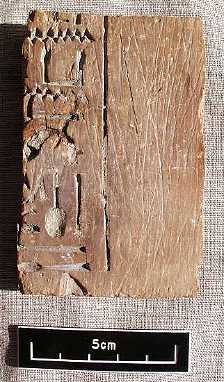
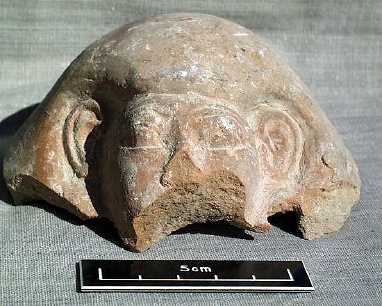
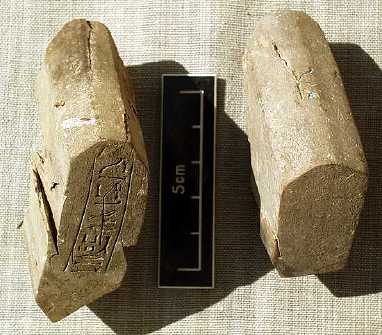
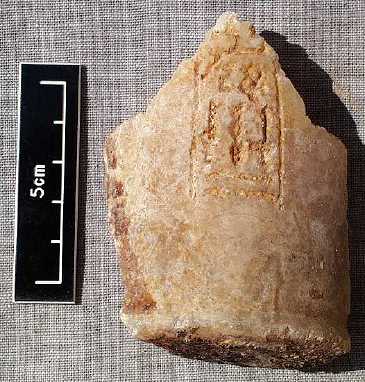
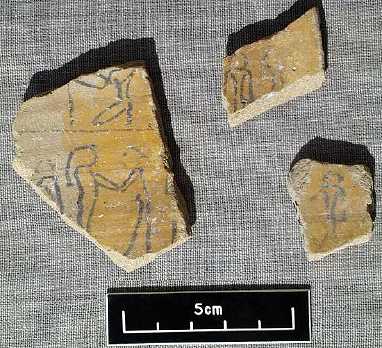
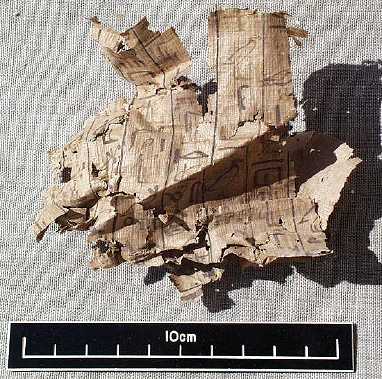
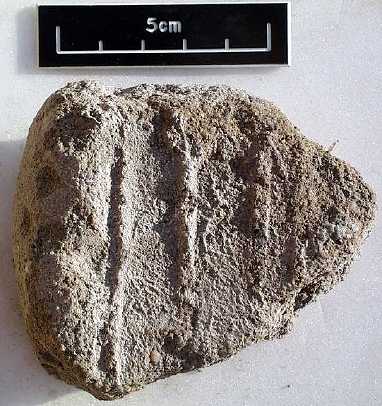
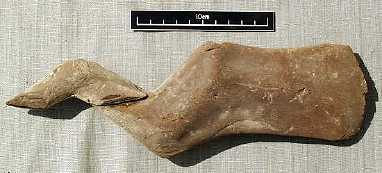
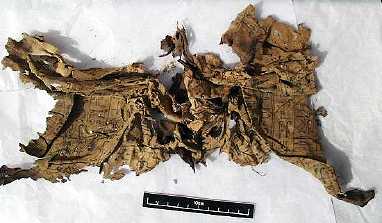
Two human-headed lids of pottery canopic jars were found (see picture 3 above), and substantial remains of at least one alabaster vessel with an oily residue inside (see picture 5 above). The alabaster jar bore the name of Senneferi; whether it was a canopic or an oil jar remains to be seen. Containers for food offerings were also found (see picture 9 above), as were model offerings, in this case the khepesh (picture 10 above). Careful excavation enabled the recovery of several hundred smallish fragments of papyrus (probably Book of the Dead (see picture 7 above), including fragments of vignettes (not illustrated). Some fragments bore the name and title of Senneferi. Parts of a linen shroud of Senneferi, also bearing texts from the Book of the Dead (see picture 11 above) were also located.7 A number of thinner fragments of wood also bore the name of Senneferi, and it is thought that some of them may belong to boxes rather than coffins. Several other pieces of wood are thought to have come from items of furniture. Two very interesting finds are shown in picture 4 above, made of a very soft brown tafl-like limestone. In shape they resemble ends of pieces of furniture, but their function is very unclear. One bears a text mentioning the magic deity Werethekau; on the ends not visible in the illustration are the beginnings of a Htp di nzwt offering formula. Several ostraka bearing sketched figures were also found (examples in picture 6 above). The sketches look like part of the Opening of the Mouth ceremony, and we speculate that they might be aids to the artists who were to paint these scenes inside the tomb (wall 16). A vast amount of pottery was found in the final two chambers, which, from a non-expert examination, would appear to be of the 18th dynasty. The material is all securely stored in boxes inside the tomb for the future, as study of this material was not possible this season. The fragments of papyrus and linen were discovered after the departure of our conservator, and must be properly conserved and mounted before they can be studied in a future season. It is to be hoped that they will make a important contribution to our knowledge of these objects, not least because, as Senneferi can be dated to the middle of the reign of Thutmose III or thereabouts,8 they can be used as comparative dating material. At a cursory glance, the palaeography of the papyrus resembles that of the papyrus of Nu in the British Museum, also of the early 18th dynasty.9 As for mummy shrouds with texts,10 they occur at the end of the 17th dynasties and for the first half of the 18th, when they are replaced by papyri.11 As we have both in this tomb, it would indicate that the later reign of Thutmose III might have been the period when this transition was taking place. In fact, it would seem that these burial chambers of TT99 might contain one of the most informative disturbed examples of a 18th dynasty burial of a wealthy individual yet discovered. A small number of intact burials of this dynasty have been discovered over the years, but the burial apartments of other tombs of this date have either been emptied with scant regard for the material they contain, or else have revealed little material. The fact that Senneferi can be well-dated to the reign of Thutmose III means that we have an excellent opportunity here to study the contents of a tomb of a noble of that date which could have important typological ramifications for many areas of study. See his two articles: `Report on work done in the Gebel esh-Sheikh abd-el-Kurneh at Thebes January to March 1903', ASAE 5 (1904), 101-2. `Report of work in the necropolis of Thebes during the winter of 1903-1904', ASAE 6 (1905), 87 (fig. 21, 22). ASAE 5 (1904), 101-2; ASAE 6 (1905), 87 fig. 21. His name is written on these objects in both the form Sennefer The shroud bears the filiation `born of Satdjehuty' (as in the chapel). Reference in papyrus Louvre E 3226 dated to year 32 1 Axt 1: M. Megally, Le papyrus hiératique comptable E. 3226 du Louvre (BDE 53, 1971), 17, pl. XI (A recto XI, 3-4); 24, pl. XXVI (A verso XI, 3-4); id., Recherches sur l'économie, l'administration et la comptabilité égyptiennes à la XVIIIe dynastie d'après le papyrus E. 3226 du Louvre (BDE 71, 1977), 159. G. Lapp, The Papyrus of Nu (BM EA 10477) (London 1997). The most recent publication concerned with shrouds bearing these texts is P. Ronsecco, Due Libri dei Morti del principio del Nuovo Regno. Il lenzuolo funerario della principessa Ahmosi e le tele del SaNesu Ahmosi (Torino 1996). His lists include approximately 25 examples from the first half of the 18th dynasty. cf S. Quirke, Owners of Funerary Papyri in the British Museum (British Museum Occasional Paper 92, 1993), 15-18. |
 and Senneferi
 , as in the chapel.
© Nigel Strudwick 1997-2018